
Cotton Fabrics
Configuration is matched to yarn count, fabric structure, reed width and production target.
Model configuration
Choose the reed width, shedding system and weft insertion setup for your fabric. The E-190AJ-CM uses a patented, dynamically balanced beating shaft to drive the reed across the weaving width.

Textile Weaving Applications
Start with your fabric rather than a maximum speed. Yarn count, weave, width and pick density help determine the machine setup.
Configuration is matched to yarn count, fabric structure, reed width and production target.
Air-system, shedding and tension settings can be discussed for blended-yarn weaving projects.
Stable beat-up force and a rigid machine structure support demanding denim production planning.
Reed width and weaving configuration can be selected for applicable home textile fabric programs.
Machine Views
Review the complete weaving machine, advanced air-tank frame and patented beating-shaft structure before confirming a project specification.
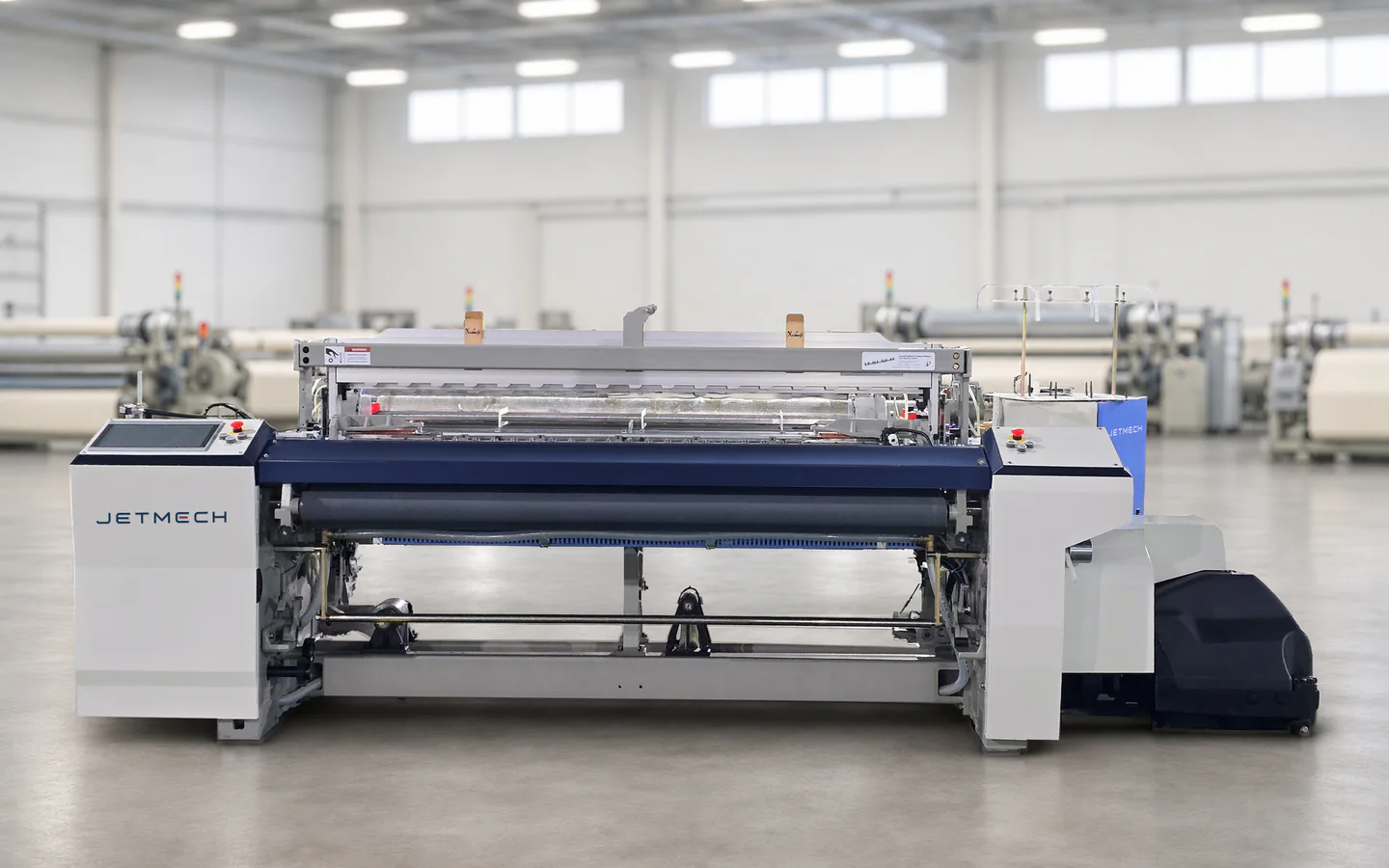
Full machine view showing the body, cloth area, and control side. Confirm final installation space from the approved machine layout.

In the four-tank configuration, the frame incorporates four side air tanks to store compressed air for weft insertion.
Balanced force transmission supports fabric-density consistency and lower machine vibration.
E-190AJ-CM Specifications
Choose the reed width for your fabric, then match the shedding system and nozzle arrangement. Confirm the selected configuration and lead time in your quotation.
| Operating speed | Confirmed for the yarn, weave, reed width and available compressed air. Provide your target output for comparison. |
|---|---|
| Machine Body | Integrated heavy-duty frame designed for stable high-speed air-jet weaving. Final body dimensions and floor-fixing details are confirmed with the approved machine layout. |
| Beating Shaft | Patented coaxial central dynamic balance beating-shaft system. |
| Let-Off / Take-Up | Positive servo-motor let-off and servo-motor take-up systems. |
| Air System | SMC main and auxiliary solenoid valves with separate pressure regulation for the main and auxiliary air circuits. |
| Controller | 14-inch English HMI with intelligent electrical control. |
| Selvedge formation | Mechanical leno as standard; electronic leno optional. |
| Edge support and cutting | Extended fabric temple. Mechanical cutting is standard; electronic cutting is optional. |
| Order Basis | Provide fabric and yarn details, required width, weft colours, target output, quantity and destination. Request written confirmation of options, lead time and warranty coverage. |
Ready to specify your loom? Send the fabric details, quantity and destination port so the quotation can identify the configuration, freight terms and warranty scope.
Request a quoteAir-System and Mechanical Components
Selected components support shedding accuracy, controlled airflow, lower wear and reliable long-term textile production.

Light, stable frames support shedding accuracy during continuous weaving.
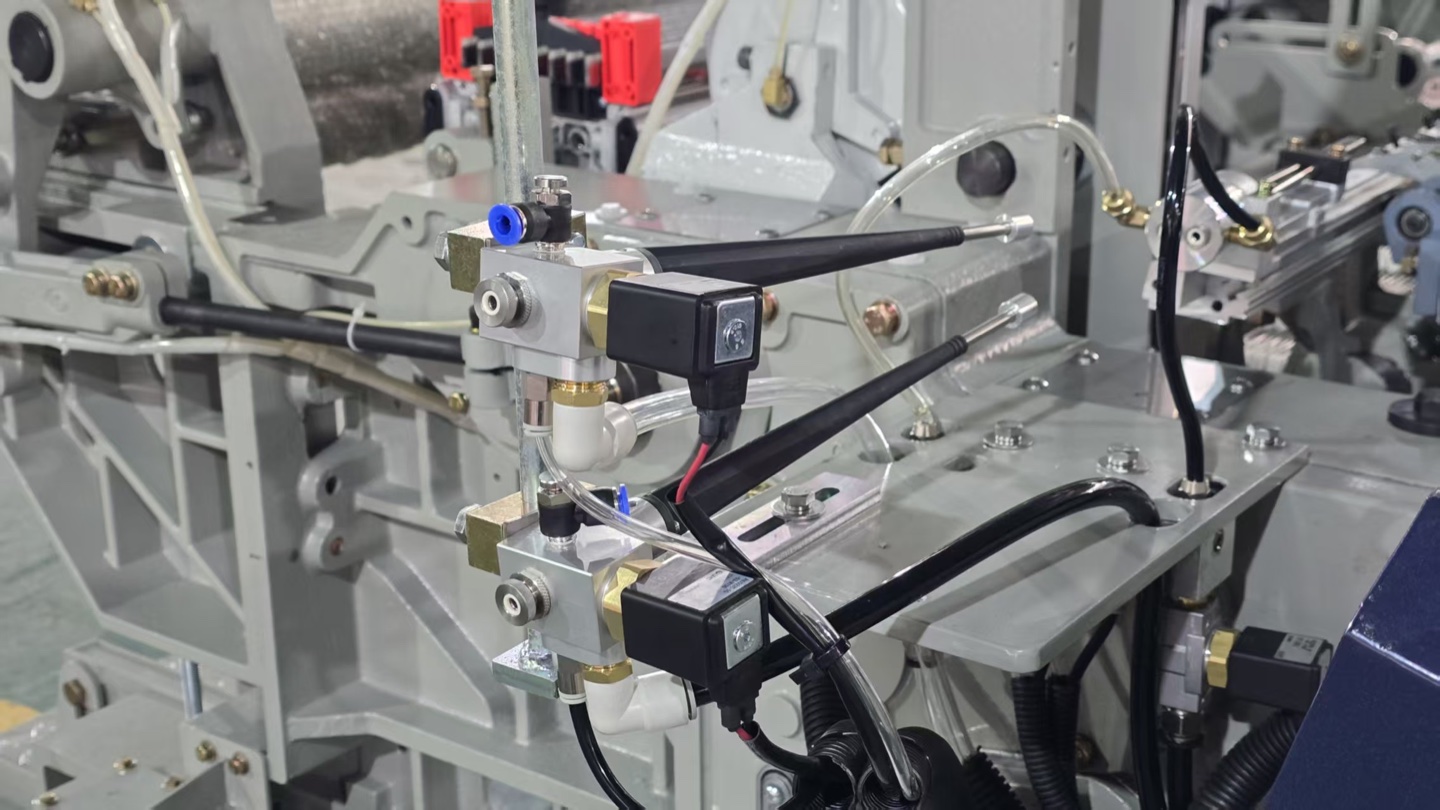
Direct mounting supports faster airflow response and accurate nozzle control.

Accurate pressure adjustment helps control air consumption and insertion stability.
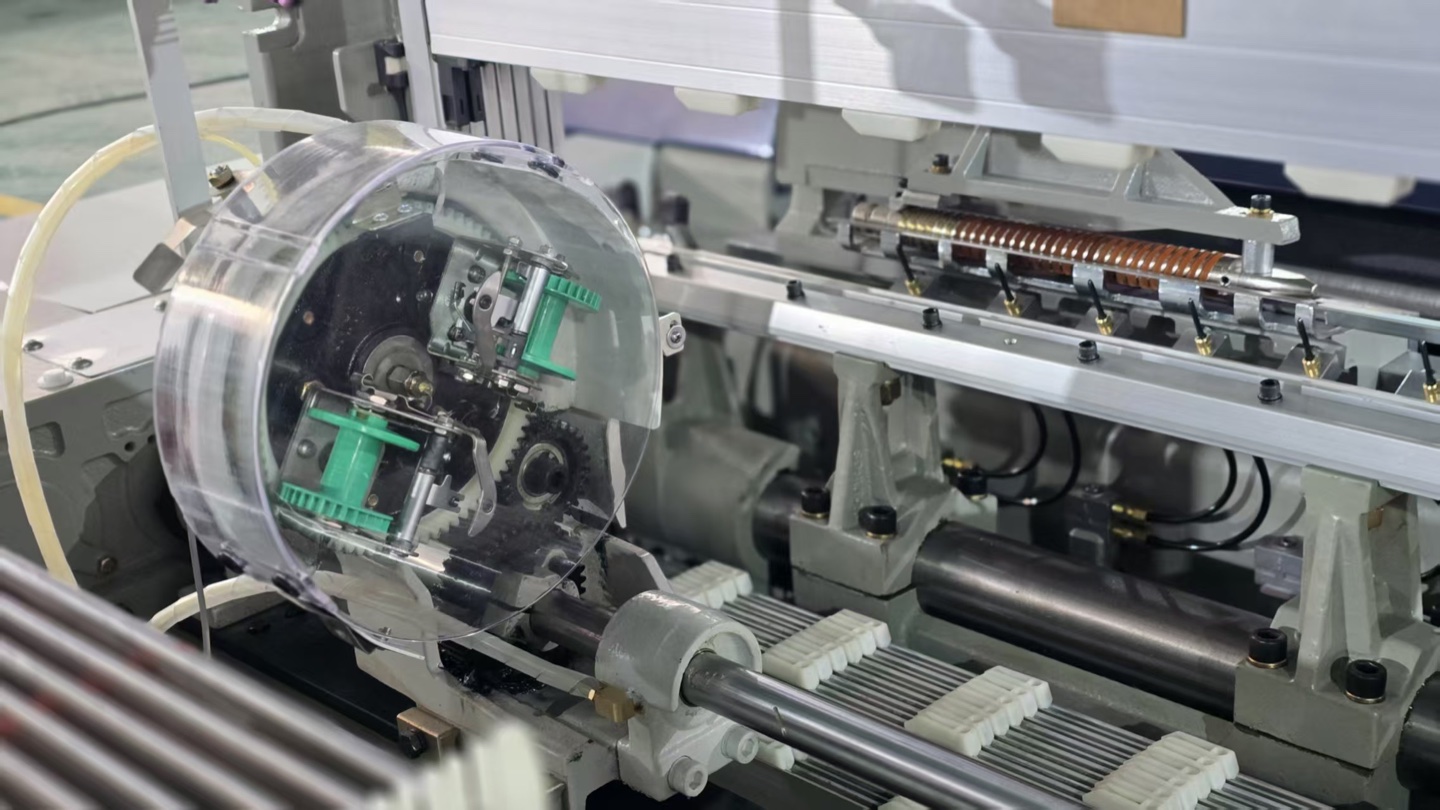
The mechanical leno device binds the weft at the fabric edge. Electronic leno is optional.
The integrated, dynamically balanced structure is designed to transmit beat-up force consistently across the reed width while reducing vibration and component load.
Buyer Information
Practical answers for textile machinery buyers preparing a machine specification and export quotation.
Send the yarn type and count, weave, warp and weft density, finished width and target output. Give the finished fabric width you need; the listed widths refer to the loom reed. A fabric sample or specification is useful for heavier fabrics such as denim.
Working speed depends on the yarn, weave, reed width and available compressed air. Ask for an operating speed for your fabric and selected configuration, not a general maximum.
Give the number of different weft yarns or colours in your fabric and their sequence. Nozzle and feeder counts describe hardware; they do not, on their own, confirm how many colours a particular loom will run.
Specify quantity and destination port or delivery address. Ask for the exact configuration, minimum order, lead time, freight terms, warranty coverage and exclusions in writing.
Share your fabric, yarn, reed width, shedding system, target output, machine quantity and destination country. JETMECH will prepare the air jet loom configuration basis for discussion.